
ISO 9001
TÜV Italia S.r.l.
Technical documentation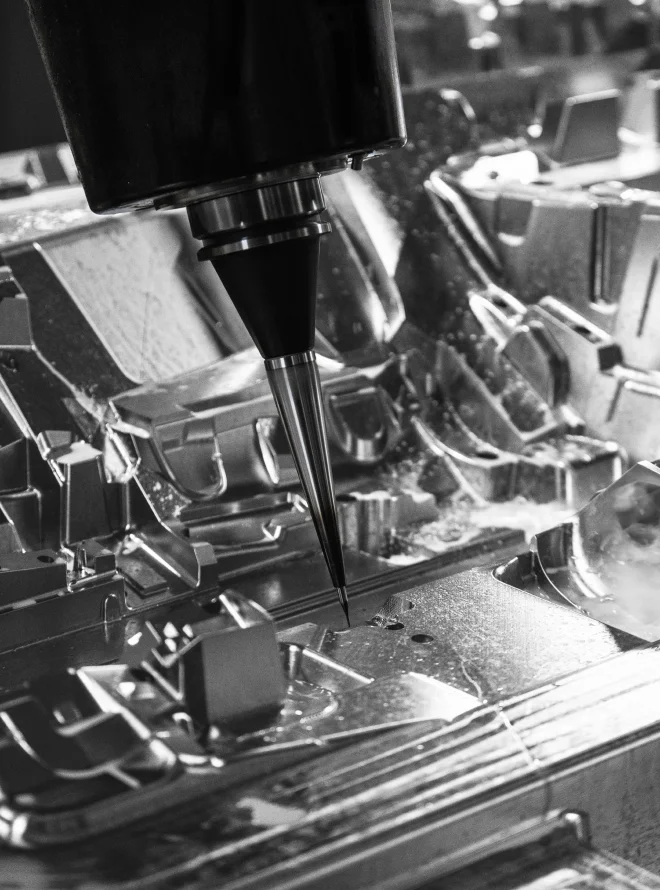
ITALIAN ENGINEERING · FIVE SPECIALISTS
A shared point of contact coordinates the technical and commercial assessment with the right company.
High- and low-pressure casting · Gravity casting · Plastic injection moulding · Compression.
5 specialist companies. One shared coordinator.
81+
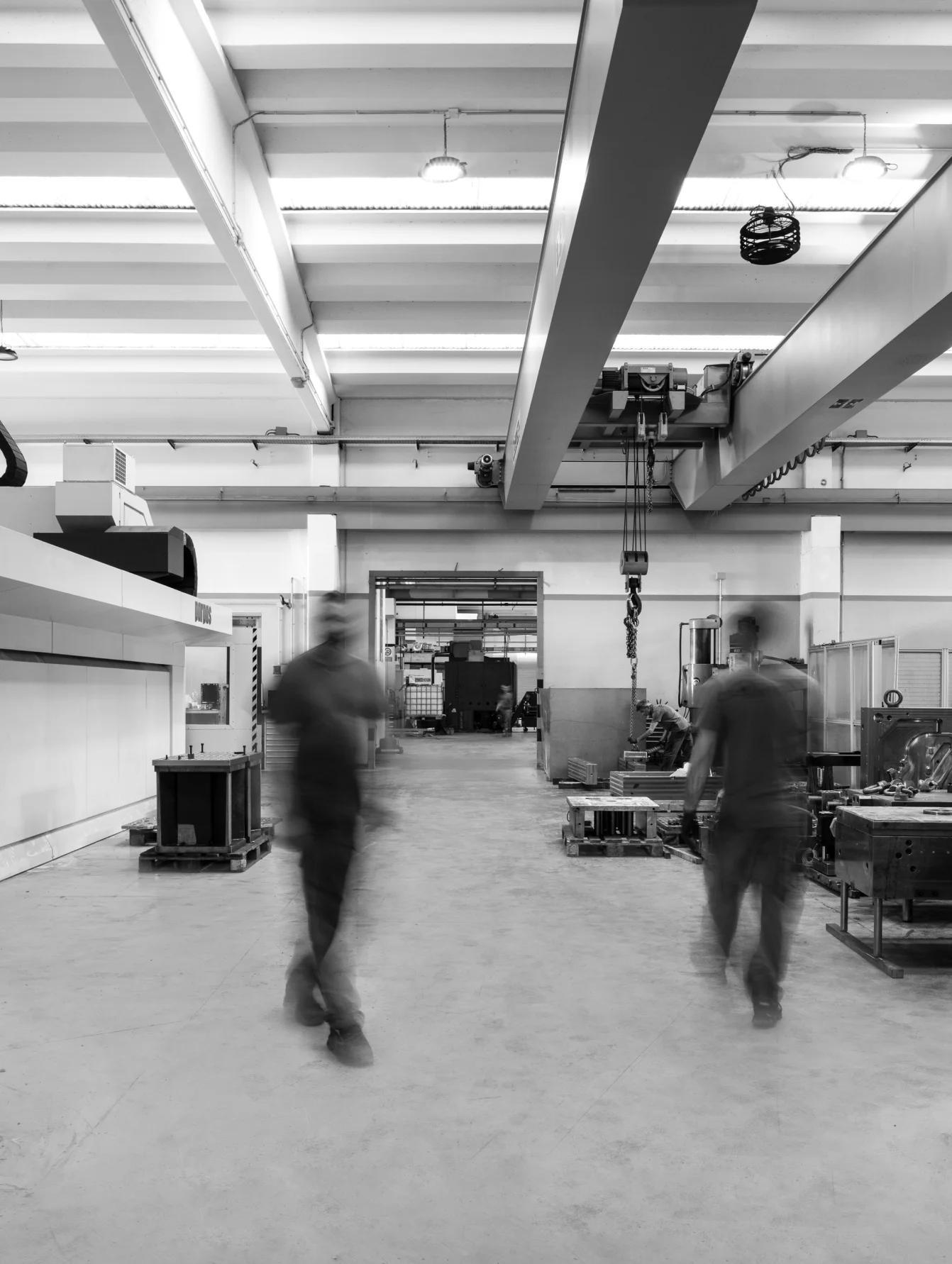
production machines and equipment
41+
machining and milling centres
Use Space to pause or resume. You can also tap or click an empty area of the strip. Logos open their source pages.











INDUSTRIAL CAPACITY
Milling, EDM, drilling and fitting. Each operation addresses a different part of the mould.
41+
Cavities, cores, inserts and plates. A machining base with 3, 4 and 5 axes to work across different surfaces, tool access and sizes.
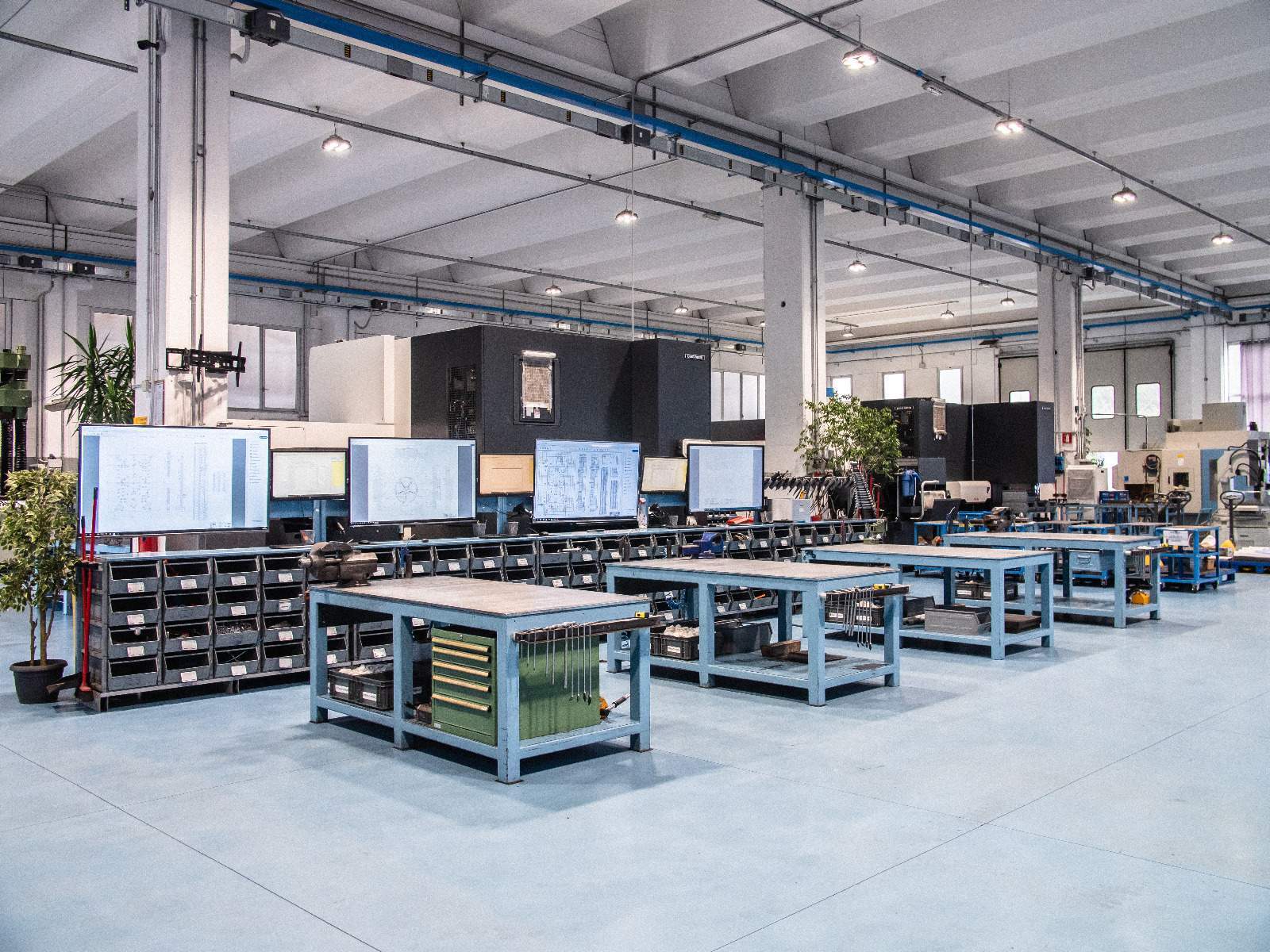
81+
All eight families belong to the total; machining centres are included. Metrology is counted separately.
Minimum count based on sources and declarations from different dates. Equipment selection and availability are assessed for each project.
From annual production to mould trials: resources to scope your project.
At least
80
declared moulds / year
>150
t of steel milled / year
Up to
60
t · maximum mould weight
Supplied technical documentation
Up to
1,000
t · compression trials
Supplied technical documentation
surface without qualification
Technical documentationdeclared facility surface
Supplied technical documentation
production surface
Technical documentationDeclared areas retain their original scope. Storage and transport depend on the mould and destination; request an assessment from the shared coordinator.
550
Partial documentary coverage of the network. Installed power; not annual electricity generation.
Documented management-system references to assess your supply requirements.
TÜV Italia S.r.l.
Technical documentation
SQS / IQNet
Technical documentationValidity, site and applicable scope are confirmed for each supply.
Sources include published certificates and marks with different periods and levels of detail. Available documentation does not establish a joint network certification.
Find the expertise your component needs: select a process to see the scope, the relevant companies and what is worth evaluating.
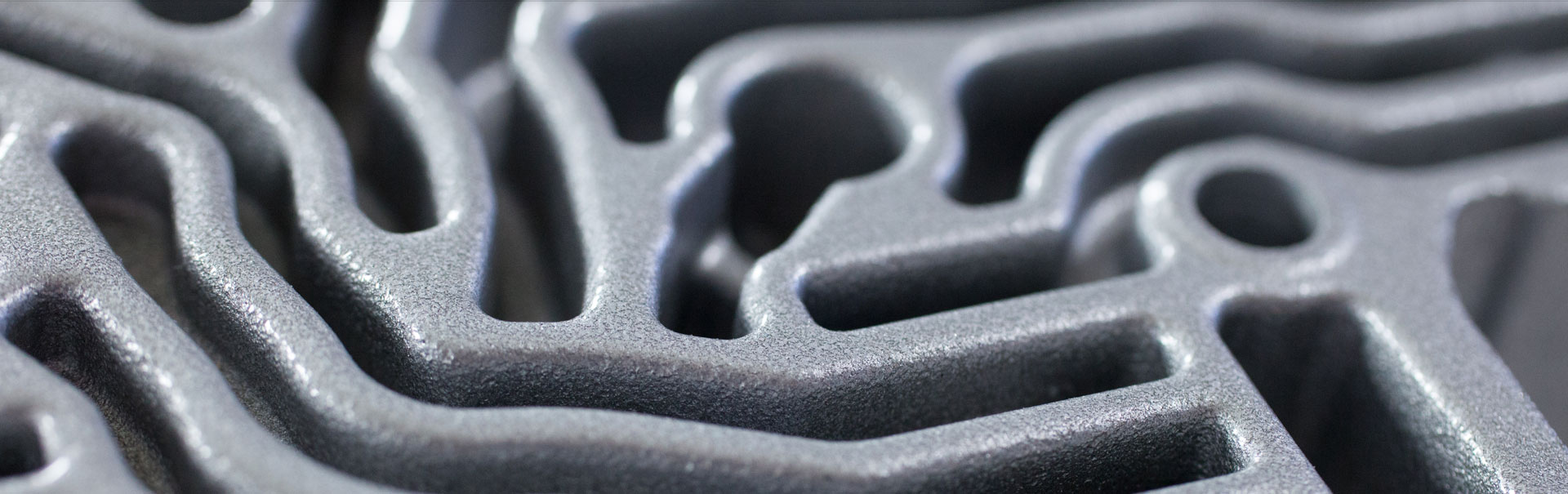
Which alloy, component and press does your project require?
High-pressure die-casting tooling with squeeze pins, vacuum and jet-cooling capabilities for filling and solidification control.
What to evaluateBefore comparing offers, clarify alloy, press size and critical tolerances: they shape the mould design.
Scope and materialsAluminium and light alloys
Technical documentationAvailable stages depend on the company and the project.
Component feasibility analysis, metallization and deformation risks, and foundry-process optimization.
2D/3D CAD/CAM/CAE design for cold-chamber aluminium and brass and hot-chamber zamak, with integrated 3D CAD/CAM.
Casting simulation, including work with qualified collaborators. Study scope is agreed for the project.
Milling, drilling and boring for mould manufacture. Heat treatment through specialist suppliers, according to requirements.
CMM dimensional reports, on-machine measurement and preventive sampling. Trial scope and deliverables are agreed per project.
Agree deliverables with the responsible company Drawings and model, simulation scope, dimensional reports and a trial plan: select the documents needed for your supply.

Which component and casting conditions need evaluation?
Low-pressure casting moulds with foundry engineering, casting studies and sampling support within the project scope.
What to evaluateDefine the component, alloy and filling sequence to assess the low-pressure mould and the trials to plan.
Scope and materialsCasting design and sampling
Technical documentationAvailable stages depend on the company and the project.
Tooling development from 2D drawings, 3D models or physical samples within the network’s low-pressure mould offering.
Casting studies and simulation. Application to a low-pressure mould and study scope are defined per project.
Manufacture with CNC milling, turning and EDM capabilities selected for mould geometry and requirements.
Foundry sampling and subsequent support. Low-pressure support is agreed within the supply scope.
Agree deliverables with the responsible company Drawings and model, simulation scope, dimensional reports and a trial plan: select the documents needed for your supply.

Which alloy and internal geometries must the tooling accommodate?
Gravity tooling, chill moulds and core boxes for brass and aluminium, with hot, cold and Cordis solutions.
What to evaluateClarify the alloy and internal geometries: they determine the number of cores and the type of permanent mould.
Scope and materialsAluminium and brass
Technical documentationAvailable stages depend on the company and the project.
Technical feasibility analysis and co-design of the component, permanent mould or core box.
Tooling CAD/CAM design and 2D/3D design of aluminium gravity-casting moulds.
Casting simulation for gravity permanent moulds alongside tooling design and sampling preparation.
Manufacture of permanent moulds and core boxes for brass and aluminium, including mould assembly and testing.
Quality control and CMM dimensional reports. Dimensions, tolerances and documentation are agreed for the supply.
Foundry sampling and subsequent support, with prototyping available when the project requires it.
Agree deliverables with the responsible company Drawings and model, simulation scope, dimensional reports and a trial plan: select the documents needed for your supply.
Which thermoplastic, finish and number of materials do you need?
Thermoplastic injection moulds with gas assistance, Class A surface and 2K/3K capabilities.
What to evaluateState the material, number of components (2K/3K) and required finish to assess the mould and the planned cycle.
Scope and materialsThermoplastics · 2K · 3K
Technical documentationAvailable stages depend on the company and the project.
Product and moulding-requirement analysis, with co-design and 3D development within the requested scope.
CAD/CAM/CAE engineering and design, with documented Moldflow analysis capability. Application is defined for the material and project.
Mould manufacture and assembly, with additional milling services for plastics tooling.
Dimensional inspection and CMM reports. Documented PPAP and Cp/Cpk capability; the documentation package is agreed per supply.
Trials, sampling, pre-series and mould repair. Maintenance is planned around project needs.
Agree deliverables with the responsible company Drawings and model, simulation scope, dimensional reports and a trial plan: select the documents needed for your supply.
Which compound, geometry and finish does the part require?
Compression and injection-compression moulds for BMC, SMC, GMT and LFT, plus cutting tooling for composites.
What to evaluateShare the compound (SMC, BMC, GMT, LFT), geometry and finish to assess tooling and pressing conditions.
Scope and materialsSMC · BMC · GMT · LFT
Technical documentationAvailable stages depend on the company and the project.
Development of compression moulds for SMC, LFT and GMT, plus BMC injection-compression tooling, with tooling analysis and design.
Manufacture and assembly using documented multi-axis milling and EDM capabilities according to mould design.
Mould dimensional inspection and checking fixtures. Reports and acceptance criteria are agreed for each project.
Compression trials with documented capability up to 1,000 t, according to the supplied technical presentation. Trials are defined per mould.
Sampling, pre-series, trials and mould maintenance: capabilities selected according to project scope.
Agree deliverables with the responsible company Drawings and model, simulation scope, dimensional reports and a trial plan: select the documents needed for your supply.
Cases published by the group's companies. Each entry states component, process, material and requirement where the source specifies them.

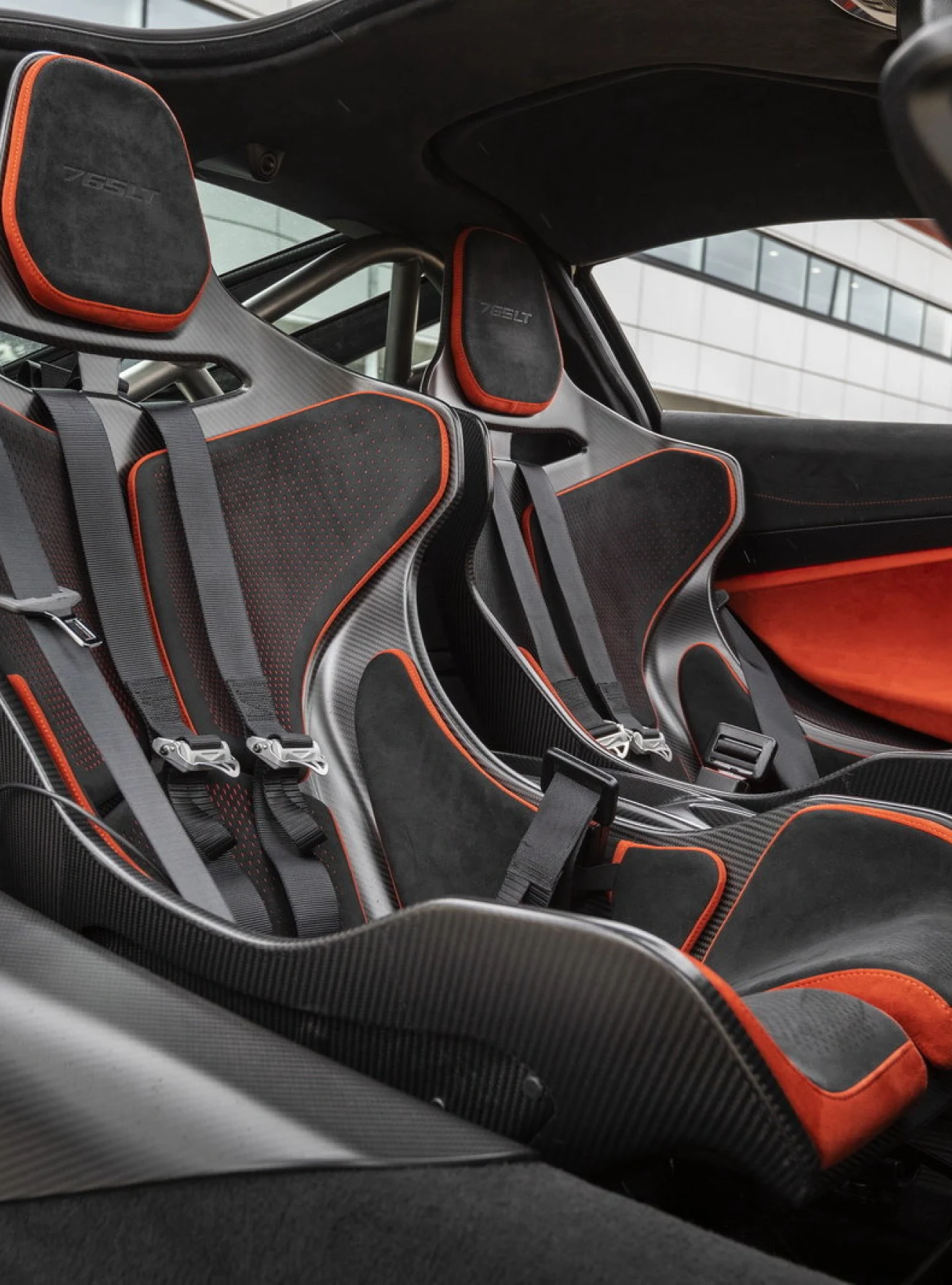
Case from the network portfolio: Porsche Macan · Mercedes G-Class · Kartell
References belong to the named companies and do not imply contracts between Italian Mold Group and the featured brands.

Silafont 36 transmission housing measuring 670 × 350 × 340 mm. Case from the network portfolio.
EQUIPMENT ATLAS
Material, depth, tool access and required finish define the manufacturing route. Here are the roles of the equipment families and the documented models.
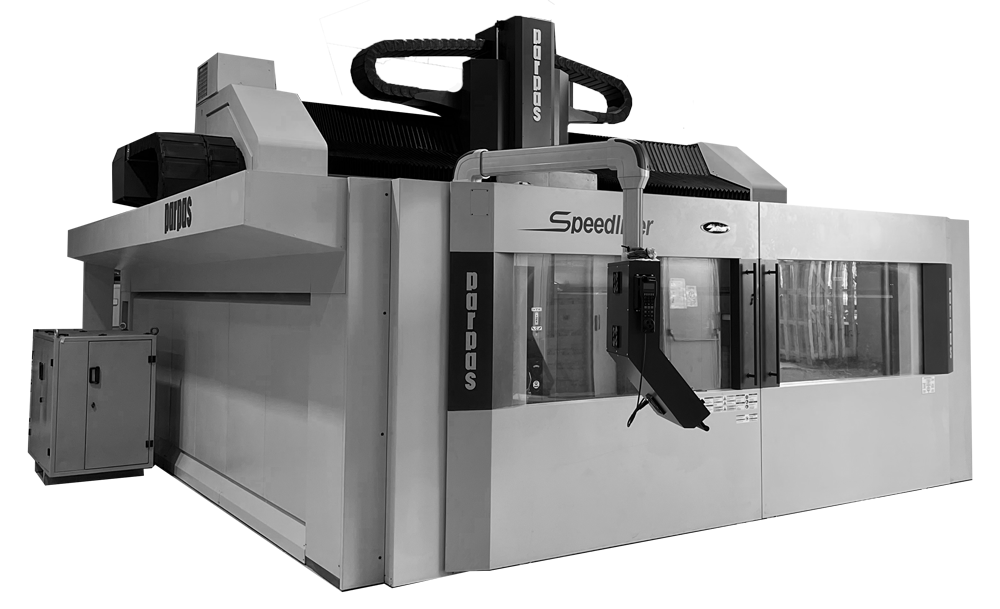
41+ machining and milling centres
The tool removes material to generate cavities, cores and parting surfaces. Additional axes let the tool approach inclined faces; internal radii and inaccessible areas may require EDM.
Turning produces diameters, shoulders, bores and threads around an axis. It serves cylindrical mould components; a freeform surface or a non-axial cavity requires a different operation.
CMZ TD35, BIGLIA 650 YS and BIGLIA 465 T2 Y2; the count also includes manual and automatic lathes.
Diameter, length, material and workholding define the machine and operation.
EDM machines electrically conductive materials. Sinker EDM uses an electrode to form cavities and deep details; wire EDM cuts through profiles. They perform different jobs.
ONA IRIS 6 and CDM ROVELLA 1200 CNC sinker EDM; MAKINO U6 H.E.A.T and FANUC Robocut α-C600iB wire EDM. OPS Ingersoll specifies a 50-electrode changer.
Useful where cutter access or radius limits the geometry. Material conductivity and required finish are assessed.
The abrasive wheel works planes and contact surfaces after rough machining or the planned heat treatment. It helps prepare support surfaces and mating faces in the assembly.
FAVRETTO MB130 and STANFOR are among the documented grinding machines.
The achievable finish and grinding geometry are defined for the part. A complex three-dimensional cavity generally needs milling, EDM or another specific operation.
Deep-hole drilling produces internal channels, for example for cooling circuits. Micro-drilling and radial drilling serve different diameters, access and tasks.
IMSA MF1450 EVO: up to 9 axes and 1,500 mm drilling depth. CR TECHNOLOGY, SY3545 EDM and a BERGONZI radial drill are also listed.
The 1,500 mm depth describes the drilling operation, not mould size. Diameter, material, intersections and channel access are assessed.
Spotting presses close a mould in a controlled way to check contact between its parts during assembly. They help identify areas that need fitting and correction.
MILLUTENSIL MIL 143.044 and MILLUTENSIL BV 30E-R are among the documented spotting presses.
Dimensions, weight, support points and fitting scope are assessed. Testing the injection or casting process requires a separate trial.
Laser welding adds material locally during repair work. Marking and engraving identify parts or work on their surfaces. These are different applications, specified separately.
One SISMA welder and one TECH LASERBERG machine. The documentation describes laser welding, marking and engraving services.
Material, repair or marking area, access and required finish are reviewed to define the intervention.
Another 11 machine tools are included in the declared total, with types not broken down in the sources.
VISI, PowerMill, hyperMILL and Tebis are among the documented tools. The model and toolpaths are prepared around the geometry, material and planned operations.
2 HEXAGON Global CMMs and 1 FARO measuring arm, outside the 81 production units. Measurement checks dimensions and surfaces against the drawing and helps define the report the project needs.
From your component to technical and commercial assessment, with a shared point of contact coordinating the relevant companies.
Define the component and process
State the part you need, with the material and intended process, even if the process is still to be decided.
The shared point of contact coordinates the assessment
A shared point of contact routes the enquiry to the relevant companies and coordinates the technical and commercial assessment.
You agree scope and validation with the company
The responsible company agrees with you the technical and commercial scope, the validation and the project contract.
In this demo, prepare and download your enquiry. To start the assessment, share it through an official contact.
Practical answers on coordination, confidentiality, validation, delivery and cost.
Italian Mold Group has a shared point of contact who coordinates the technical and commercial assessment with the right company. Technical and contractual responsibility for the project is agreed with the selected company.
No. This version prepares a local file you can copy and download. It does not receive enquiries, does not send your data, and the address shown is a demonstration one.
A non-confidential description is enough to prepare the summary. Before sharing drawings, agree the channel and confidentiality conditions with the target company. This demo does not accept CAD files.
Agree with the company the acceptance criteria, trials, samples and reports, together with progress milestones and each party's responsibilities.
The website is available in Spanish, Portuguese and English. Confirm the language for technical and commercial assessment with the shared point of contact.
The network offers mould maintenance capabilities. Ask the proposal to specify logistics, customs, insurance, spare parts and support, including where the service will be provided.
Clarify each item with the company: engineering and simulation, build and components, treatments and finishes, trials and materials, changes included or excluded, packing, transport, acceptance and spare parts. These are terms to agree, not prices or guaranteed inclusions. Ask which items are included and which are quoted separately.
Storage area, racking capacity, stock level and production lead time have not been published. Share the project volume, storage and shipping you expect with the shared point of contact so these points can be agreed with the company.
Each company keeps its own specialism. A shared point of contact coordinates the technical and commercial assessment with the right company.
Italian specialist in injection and compression moulds for thermoplastics and composites. It designs and builds medium and large tooling, with a Class A finish and gas assistance.
Useful questionDoes your part need a Class A finish or a 2K/3K variant? Describe it to assess the mould.
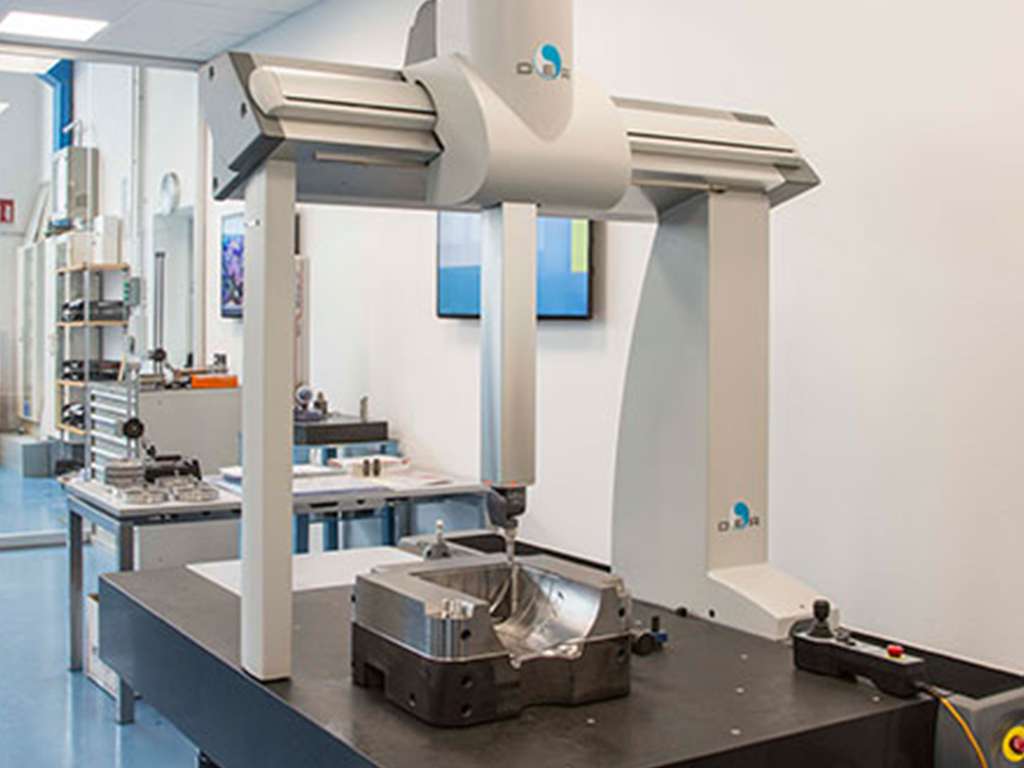
It integrates mould design, construction, metrology and maintenance. It works on light-alloy die casting, plastic injection moulding and aluminium gravity casting.
Useful questionDo you need to define critical dimensions, sampling or mould maintenance? State it to agree the control plan.
CMM
Hexagon dimensional control
It has built high-pressure die-casting moulds since 1976, with foundry engineering and process control. It applies squeeze pins, vacuum and jet cooling for process control.
Useful questionWhich alloy, component and press define your project? Share them to assess the HPDC mould.
Squeeze pins
vacuum and jet cooling
A maker of chill moulds and core boxes since 1978 for gravity casting of brass and aluminium. It also offers milling for injection moulds and dies.
Useful questionWhich internal geometry must the core boxes accommodate? Describe it to assess the tooling.
Patternmaking and foundry moulds since 1985. It develops gravity chill moulds, low- and high-pressure moulds and hot, cold and Cordis core boxes.
Useful questionAre you starting from a 2D drawing, a 3D model or a physical pattern? State it to plan the mould and sampling.
Describe the project to prepare a clear enquiry. Review, copy or download it locally before sharing it with the right company.